
LNH31.
Cross-Border Trade · B2B · Amazon
Operations7 min read·
Air vs. Sea Freight for Amazon FBA: When to Use Each and How to Optimize Costs
Choosing between air and sea freight is one of the most impactful logistics decisions for Taiwan FBA sellers. This guide breaks down costs, transit times, use cases, and the hybrid strategies that optimize both speed and margin.
air vs sea freight amazon fbaamazon fba shipping costtaiwan to usa freightfcl lcl shippingfba logistics strategy
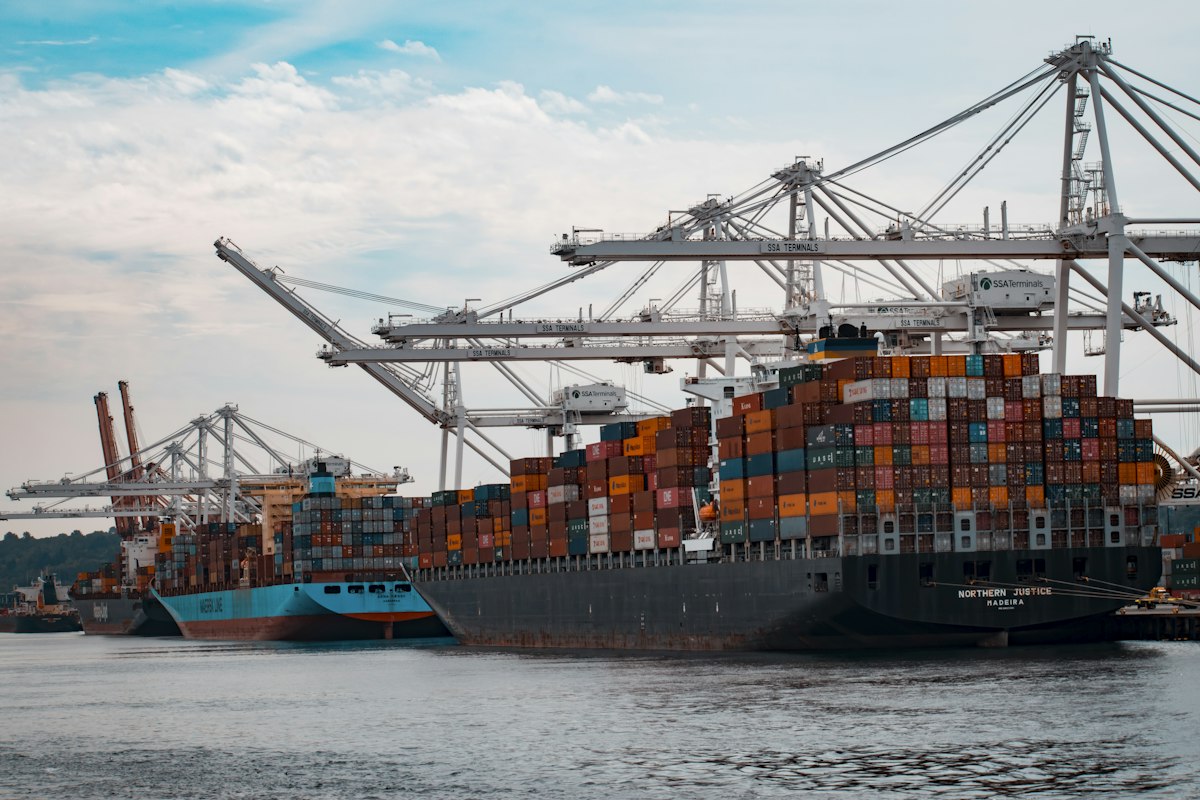
Why Freight Mode Is a Strategic Business Decision, Not Just a Logistics Choice
For Taiwan-based Amazon FBA sellers, freight costs between Taiwan and US, Australian, or Japanese Amazon warehouses are one of the largest variable costs in the business. A $2.00 per unit difference in freight cost on a $30 product represents a 6.7% margin swing — the difference between a profitable business and a money-losing one.
Beyond cost, freight mode choice determines your operational flexibility: sea freight's 25–45 day transit time means you need to order inventory 6–8 weeks before you need it at Amazon. Air freight's 5–7 day transit allows reactive restocking. Each mode has a role in a well-managed FBA supply chain.
The most common mistake Taiwan FBA sellers make is defaulting to one mode exclusively — either always using sea freight to minimize cost or always using air freight for security. The optimal strategy uses both modes strategically, reserving air freight for specific situations where its cost premium is justified by business value.
This guide focuses on Taiwan-origin shipments to Amazon US (Los Angeles, New Jersey area warehouses), Amazon Australia (Melbourne, Sydney), and Amazon Japan (Tokyo, Osaka). Transit times and rates vary by destination but the framework applies across all three.
Sea Freight: Costs, Lead Times, and When to Use It
Sea freight types: LCL (Less than Container Load) consolidates your cargo with other shippers in a shared container. FCL (Full Container Load) is a dedicated container — 20-foot (20 CBM useful volume) or 40-foot (40+ CBM).
Taiwan to US West Coast (Los Angeles/Long Beach) LCL: approximately $80–$180 per cubic meter (CBM) for the ocean freight portion. Total door-to-Amazon-warehouse cost including origin charges, ocean freight, US customs clearance, and inland delivery: approximately $150–$300 per CBM. Transit time: 14–21 days ocean + 1–2 weeks for origin/destination handling = 25–35 days total.
Taiwan to US East Coast (New Jersey/Savannah) LCL: approximately $120–$200 per CBM ocean. Total door-to-warehouse: $200–$400 per CBM. Transit: 25–35 days ocean + handling = 35–50 days total.
Taiwan to Australia (Melbourne) LCL: approximately $100–$200 per CBM. Transit: 14–21 days. Taiwan to Japan (Tokyo) LCL: approximately $60–$120 per CBM. Transit: 7–14 days.
FCL economics: a 20-foot container becomes cost-effective when you have more than 8–10 CBM of cargo. Below that volume, LCL is cheaper. Above 10 CBM, compare LCL total vs. FCL total (a 20' FCL from Taiwan to US West Coast runs $1,800–$3,500 for the container, plus fees).
Best use cases for sea freight: established products with predictable demand and sufficient lead time, large initial inventory builds (first container shipment), seasonal stock builds (Q4 inventory shipped in July–August), and any shipment above 3 CBM where urgency is not critical.
Air Freight: Costs, Lead Times, and When to Use It
Air freight is transported as air cargo on commercial or dedicated cargo flights. It can move via express services (DHL, FedEx, UPS) or via air cargo through forwarders.
Express courier (DHL, FedEx, UPS): door-to-Amazon-warehouse in 3–7 days. Cost: approximately $5–$10 per kilogram from Taiwan to the US for commercial shipments. A typical 100 kg shipment costs $500–$1,000 in freight alone. Express services are best for shipments under 150 kg.
Air cargo via freight forwarder: slower than express (7–14 days), but cheaper for larger volumes. Cost: approximately $2.50–$5.00 per kg door-to-door for Taiwan-to-US air cargo. A 300 kg shipment might cost $750–$1,500 — significantly cheaper per unit than express.
Per-unit cost comparison: consider a product weighing 0.5 kg per unit. Sea freight cost: $0.10–0.20 per unit. Air express cost: $2.50–$5.00 per unit. For a $25 product, air freight adds 10–20% to the landed cost — substantial, but sometimes necessary.
Best use cases for air freight: product launches (first 200–300 units to seed Amazon inventory while sea shipment is in transit), emergency restocks (stockout prevention when sea shipment is delayed), new market testing (low risk to test demand before committing to a sea shipment), and time-sensitive seasonal products (Christmas ornaments must arrive before December 1).
The Hybrid Strategy: Air and Sea in the Same Supply Chain
The most efficient Taiwan FBA supply chain uses sea freight as the primary replenishment mode and air freight for specific tactical situations.
Standard replenishment cycle: review inventory levels monthly. When you have 45–60 days of supply remaining, trigger a sea freight replenishment. The sea shipment arrives in 25–35 days, giving you a 10–25 day buffer before stockout.
Air freight trigger: if your sell-through rate accelerates unexpectedly (new review, viral social media mention, influencer coverage) and your sea shipment will not arrive before stockout, send an air freight emergency replenishment of 4–6 weeks of inventory. The air freight cost is justified by avoiding a stockout that would drop your organic ranking.
First launch strategy: ship the first 200–300 units by air to seed Amazon inventory while your main sea shipment (1,000+ units) is in transit. The air units provide 4–6 weeks of inventory to build initial reviews and ranking while the bulk inventory arrives. Total incremental cost of air shipping 300 units at $3/kg: approximately $450–$600 for a typical product — worth the insurance value.
Seasonal bifurcation: for products with Q4 peaks, send the main Q4 inventory build via sea in July–August. If you underestimate demand and need emergency Q4 stock, the air freight premium is justified by Q4 pricing power (some products can be priced 10–20% higher in peak season).
Working With Freight Forwarders: What Taiwan FBA Sellers Need to Know
A freight forwarder manages the logistics of moving your cargo from Taiwan to the Amazon warehouse, including: ocean or air booking, origin handling and documentation, customs export from Taiwan, customs import into the destination country, and final mile delivery to the Amazon fulfillment center.
FBA-experienced forwarders: not all freight forwarders are familiar with Amazon FBA receiving requirements. Use a forwarder with specific FBA experience — they understand FNSKU labeling, carton marking requirements, and Amazon's Partnered Carrier Program. Mishandled shipments result in Amazon refusing to receive or placing your shipment in a long receiving queue.
Getting quotes: provide your forwarder with: origin (city in Taiwan), destination (specific Amazon warehouse address from your Seller Central shipment plan), dimensions and weight of your cartons, number of cartons, and your preferred service (LCL sea, FCL sea, or air). Request all-in quotes — port-to-port quotes exclude origin and destination charges, which can add 30–50% to the stated price.
Amazon Partnered Carrier Program: Amazon offers discounted carrier rates for US domestic leg (from US port to Amazon warehouse) through their Partnered Carrier Program. Ask your forwarder if they can utilize Amazon PCP for the inland US delivery portion — rates are typically 20–40% cheaper than commercial rates.
Documentation: every international shipment requires a commercial invoice (value of goods), packing list (carton dimensions, weights, contents), bill of lading (sea) or air waybill (air), and a shipper's letter of instruction. Ensure your commercial invoice reflects the accurate customs value — undervaluation is a customs violation regardless of shipment size.
Frequently Asked Questions
What is the minimum shipment size for sea freight LCL from Taiwan?
LCL accepts shipments from as small as 0.1 CBM (about the size of a small cooler). However, LCL becomes economically meaningful at around 0.5–1 CBM. For shipments under 0.3 CBM, air freight may be comparable in cost to LCL once origin and destination handling fees are included.
How do I calculate cubic meters for my shipment?
Multiply length × width × height of each carton in meters, then multiply by the number of cartons. Example: carton 60cm × 40cm × 40cm = 0.6m × 0.4m × 0.4m = 0.096 CBM per carton. 20 cartons = 1.92 CBM total. Use the actual carton dimensions including packaging, not just the product dimensions.
Can I use Amazon's freight service (Amazon Global Logistics) from Taiwan?
Amazon Global Logistics (AGL) offers ocean freight services from China and some other Asian origins. Availability from Taiwan specifically changes — check current availability in Seller Central under Inventory > FBA Shipments > Create Shipment > Amazon Global Logistics. When available, AGL rates are competitive and the end-to-end Amazon integration simplifies the shipment process.
What happens if my sea freight shipment is delayed at port?
Port congestion, customs holds, and weather delays are common. Communicate your shipment ETA to your Amazon Seller Central shipment plan and update it if it changes. If delay will cause a stockout, evaluate whether an emergency air shipment is cost-justified based on your daily revenue loss from being out of stock. Build 2–3 week delay buffers into your replenishment planning as standard practice.
Sources & References
- —Flexport — Taiwan to USA Freight Rate Index
- —Amazon Seller Central — Shipping and Routing Requirements
- —Freightos — International Freight Rate Comparison
- —Amazon Global Logistics — Enrollment and Pricing
Ready to Enter the US Market?
We turn great products into global sales. Contact us today.
START PARTNERSHIP →
